
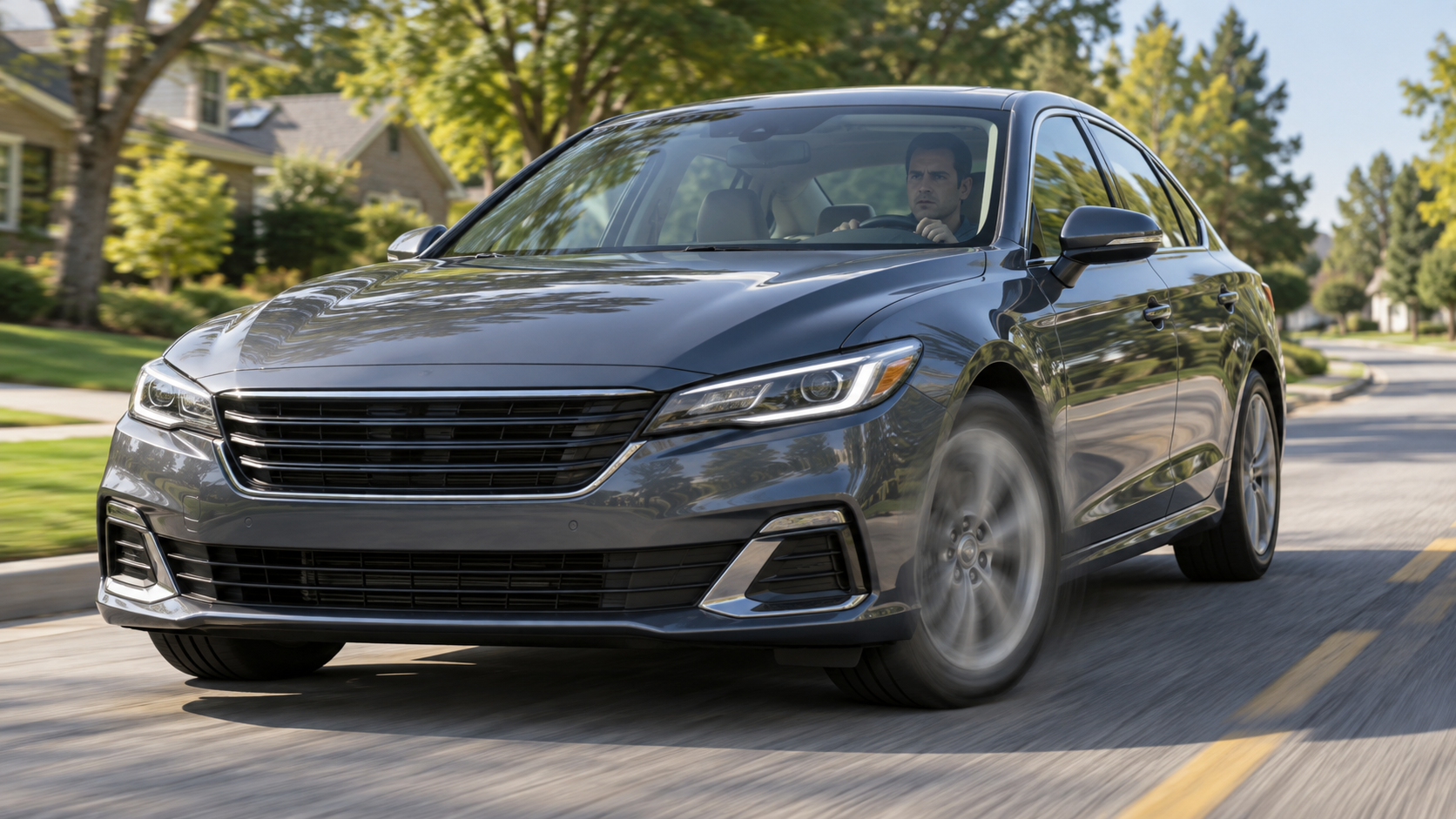
You are driving normally, then suddenly the steering wheel starts trembling. Or maybe the whole car shakes while sitting at a red light. Sometimes it happens only when you brake. Other times the vibration shows up around 60 mph and disappears again when you slow down.
That is when the obvious question pops up: why is my car shaking?
There is no single answer because a vehicle can vibrate for dozens of reasons. Some are fairly minor, such as an unbalanced wheel. Others can involve brakes, tires, suspension parts, engine mounts, ignition problems, or drivetrain components.
The good news is that the timing of the vibration gives away quite a lot.
A car shaking at idle tells a different story from a car shaking only at highway speed. A steering wheel that moves during braking points you toward a different area than vibration that appears only when accelerating.
So instead of trying to guess one bad part, start with a simpler question: when does the shaking happen?
The Timing of the Shake Is Your Biggest Clue
Before opening the hood or pricing new tires, pay attention to the pattern.
Does the car shake while parked? Does it happen only above 50 mph? Does the vibration increase when you press the accelerator? Maybe the steering wheel shakes when you brake downhill.
Those details narrow the possibilities very quickly.
| When the Car Shakes | Common Areas to Check | Extra Clues |
|---|---|---|
| At idle | Engine, ignition, mounts, fuel or air problems | Watch engine RPM and warning lights |
| At highway speed | Tires, wheel balance, wheels, suspension | Notice whether vibration peaks at one speed range |
| While braking | Brake rotors, calipers, suspension | Check whether the brake pedal also pulses |
| While accelerating | CV axles, engine mounts, drivetrain, engine | See whether it stops when you lift off the gas |
| While turning | CV joints, wheel bearings, suspension | Listen for clicking or grinding too |
| After hitting a pothole | Tire damage, bent wheel, suspension, wheel geometry | Look for a bulge or sudden pulling |
Car Shaking at Highway Speed
This is probably one of the most familiar versions of the problem.
The car feels fine around town. Then you reach 55, 60, or 70 mph and the steering wheel starts buzzing. Sometimes the vibration gets stronger for a few miles per hour and then becomes less noticeable again.
Wheel balance is a common suspect.
A wheel and tire assembly is never perfectly even in weight. Small balancing weights are added so the assembly rotates smoothly. If a weight falls off, a tire wears unevenly, or a wheel becomes damaged, vibration can appear at certain speeds.
You may feel it mostly through the steering wheel if the problem is at the front. A rear-wheel balance problem may feel more like a vibration through the seat or floor.
Still, do not automatically assume every highway vibration needs a wheel balance. Tire damage, bent wheels, loose wheel hardware, worn suspension parts, or uneven tire wear can feel similar.
Could It Be a Tire Problem?
Absolutely.
Tires are one of the first things worth checking when a car begins shaking while moving.
A tire can develop uneven tread, internal damage, a bulge, or a flat spot. Pressure that is far from the vehicle’s recommendation can also change how the car feels.
One tire may look fine from the outside while having an internal structural problem that creates vibration as it rotates.
Check all four tires rather than focusing only on the one closest to where you think the shaking comes from.
- Look for sidewall bulges or bubbles.
- Check for deep cuts or visible cord material.
- Compare tread wear from one tire to another.
- Look across the full tread width, including the inner edge.
- Check cold tire pressure against the vehicle label.
- Notice whether one tire has worn into unusual high and low spots.
- Inspect for objects stuck in the tread.
A bulging tire should not be treated like a cosmetic issue. It may indicate internal damage and deserves prompt attention.
Uneven Tire Wear Can Create a Surprisingly Strong Vibration
A tire does not need to be bald to cause trouble.
If one part of the tread is higher than another, the tire may no longer roll smoothly. Drivers sometimes describe this as a rhythmic thumping rather than a fine vibration.
Cupped or scalloped tread can develop when suspension components are worn, wheel balance is poor, or the tire has been operating under unfavorable conditions for a long time.
And here is the annoying part: replacing the tire without fixing the reason for the wear can simply ruin the next tire too.
If the tread pattern looks odd, check the vehicle around it rather than treating the rubber as the whole problem.
Wheel Balance vs. Wheel Geometry
These two get confused constantly.
Wheel balancing deals with how evenly the wheel-and-tire assembly rotates.
Wheel geometry deals with the angles at which the wheels sit relative to the vehicle and road.
An imbalance often causes vibration at certain speeds.
Incorrect wheel geometry more often creates pulling, an off-center steering wheel, or uneven tire wear. But if poor geometry has already damaged the tires, those worn tires may then start producing vibration.
So yes, the problems can eventually overlap.
A Bent Wheel Can Feel Like an Unbalanced Tire
Hit a deep pothole hard enough and the wheel itself may bend.
That can create a repeating vibration as the wheel rotates.
Some bends are easy to spot. Others are on the inner part of the rim, where you may not see them while standing next to the vehicle.
A tire shop can spin the wheel and check whether it runs true.
If the shaking began immediately after a pothole, curb strike, or road impact, mention that history. It is a useful clue.
What if the Steering Wheel Shakes When You Brake?
Now the brakes move higher on the list.
A steering wheel that vibrates mainly during braking can be related to brake rotor thickness variation, rotor surface irregularities, or other brake and suspension issues.
People often call this “warped rotors,” although the actual condition can be more nuanced than a rotor simply bending like a dinner plate.
If the front brakes are involved, you may feel the movement through the steering wheel. If the rear brakes contribute, the vibration may feel more through the seat or body.
The brake pedal can pulse too.
A brake vibration should be inspected, especially if it becomes stronger, braking performance changes, the vehicle pulls to one side, or you hear grinding.
A Sticking Brake Caliper Can Make the Car Feel Wrong
A brake caliper that does not release properly can keep one brake partially applied.
This can create heat, pulling, unusual smells, uneven brake wear, and sometimes vibration.
After driving, one wheel may be much hotter than the others.
Do not touch brake components immediately after driving to test this. Brakes can become hot enough to cause burns.
If you notice a strong burning smell, smoke near a wheel, or the car suddenly pulling while driving, stop and have the vehicle checked.
Why Is My Car Shaking at Idle?
Now we move away from tires.
If the vehicle shakes while completely stopped with the engine running, wheel balance is obviously not the first suspect. The wheels are not turning.
Instead, think about engine operation and the parts that isolate engine vibration from the body.
A healthy engine is not perfectly motionless. Combustion creates pulses, and the rotating assembly produces vibration. Engine mounts prevent most of that movement from reaching the cabin.
If the engine begins running unevenly or a mount wears out, you may suddenly feel much more shaking.
An Engine Misfire Is a Common Reason for Rough Shaking
An internal-combustion engine needs each cylinder to contribute properly.
If one cylinder fails to burn its air-fuel mixture correctly, the engine can run unevenly. Drivers often feel this as shaking, stumbling, or rough idle.
Possible causes include ignition, fuel delivery, air leaks, mechanical engine problems, or sensor-related faults.
Spark plugs and ignition coils are familiar examples, but they are not the only possibilities.
This is why replacing spark plugs simply because the engine shakes is not always a smart shortcut.
A diagnostic scan may show misfire codes or other stored information that helps narrow the cause.
Pay Attention to the Check-Engine Light
If the car is shaking and the check-engine light is flashing, take that combination seriously.
A flashing check-engine light commonly indicates an active misfire severe enough to risk overheating or damaging the catalytic converter.
Reduce load on the engine and avoid continuing normal driving while hoping the light will stop.
If the engine is shaking strongly, losing power, or the warning continues flashing, arrange proper diagnosis.
A steady check-engine light is different, but it still means the engine control system has detected a problem that should be checked.
Worn Engine Mounts Can Make Normal Engine Vibration Feel Much Worse
Engine mounts hold the engine and transmission in position while absorbing vibration.
Some are simple rubber-and-metal components. Others are hydraulic or electronically controlled.
As a mount deteriorates, the engine may move more than intended.
You may feel vibration:
- While idling in Drive.
- When shifting between Reverse and Drive.
- During acceleration.
- When the air conditioner turns on.
- When the engine is loaded at low RPM.
- Through the steering wheel, seat, dashboard, or floor.
A worn mount can also allow the engine to move enough for another component, such as the exhaust system, to contact the body and make additional noise.
Why Does the Car Shake Only in Drive?
This pattern can be useful.
If the engine feels fairly smooth in Park or Neutral but vibration becomes much stronger in Drive while you are stopped, the added load on the engine may be exposing a worn mount or rough engine operation.
Turning on the air conditioner can produce a similar clue because the compressor adds load.
A small change in idle character may be normal.
A dramatic shaking sensation is not.
Why Does My Car Shake When Accelerating?
Acceleration loads the engine, transmission, axles, and mounts.
That makes acceleration-related vibration particularly useful for diagnosis.
One common cause on front-wheel-drive and all-wheel-drive vehicles is wear in a CV axle, especially an inner CV joint.
An inner joint can sometimes create a strong vibration under acceleration that becomes much weaker when you lift off the gas.
Outer CV joints are more famous for clicking during tight turns.
But remember, drivetrain designs vary. A technician needs to inspect the actual vehicle rather than diagnosing the axle from one symptom alone.
Driveshaft Problems Can Cause Speed-Related Vibration
Rear-wheel-drive and four-wheel-drive vehicles may have one or more driveshafts carrying power through the drivetrain.
Problems involving universal joints, center support bearings, driveshaft balance, or related components can create vibration that changes with road speed or load.
This type of vibration may be felt strongly through the floor or seat.
It can be especially noticeable under acceleration.
If the shaking becomes severe, comes with clunking, or appears suddenly after drivetrain work, have it checked rather than continuing to drive at high speed.
Can a Bad Wheel Bearing Cause Shaking?
It can contribute, although wheel bearings are more commonly associated with humming, growling, or grinding noises that change with vehicle speed.
As wear becomes severe, looseness in the wheel assembly can affect handling and vibration.
You may notice the sound changing when the vehicle turns because the load on the bearing changes.
A wheel bearing should not be diagnosed only by noise from inside the cabin, though. Tires can create extremely similar sounds.
Suspension Wear Can Show Up as Vibration
Your suspension controls wheel movement while keeping the tires in contact with the road.
Worn shocks, struts, bushings, ball joints, tie rods, and other components can affect how the vehicle feels.
Sometimes the first symptom is not a dramatic clunk.
Instead, the car begins to feel nervous, shaky, floaty, or unsettled over rough pavement.
Uneven tire wear can follow, which adds another source of vibration.
It becomes a chain reaction.
When Shaking After a Pothole Is Worth Checking Quickly
American roads are not exactly gentle everywhere.
A pothole impact can damage more than one part at once.
The tire sidewall may suffer internal damage. A wheel can bend. Steering or suspension geometry can shift. In a harder impact, suspension components may also be affected.
If the vehicle starts shaking immediately after a pothole strike, check for:
- A new tire bulge.
- Loss of tire pressure.
- A visibly damaged wheel.
- A steering wheel that is suddenly off-center.
- New pulling to one side.
- Noise during turning or braking.
- A vibration that increases with speed.
- Warning lights related to tire pressure or stability systems.
Do not keep driving fast simply to see whether the shaking disappears.
Can Snow, Mud, or Ice Make a Car Shake?
Yes, and this is one of the stranger causes.
Snow, ice, or packed mud can build up inside a wheel and create an imbalance.
You may drive normally one day, park during a snowstorm, then suddenly feel major vibration the next morning.
The wheel itself may be perfectly fine. It simply has a chunk of frozen material sitting on one side.
This is especially relevant for drivers in northern states during winter.
If conditions allow, inspect the wheels for packed snow or ice before assuming the suspension has failed overnight.
Can a Loose Wheel Cause Shaking?
Yes, and this is one possibility you do not want to ignore.
Loose wheel fasteners can create vibration, knocking, wobbling, or abnormal steering.
If shaking begins shortly after tire replacement, brake work, or any service where a wheel was removed, have the wheel fasteners checked promptly.
A wheel that is visibly wobbling or feels unstable is not something to drive on.
Stop safely and arrange assistance.
What the Location of the Vibration Can Tell You
| Where You Feel It | Possible Areas | Typical Situation |
|---|---|---|
| Steering wheel | Front tires, wheels, brakes, steering, front suspension | Often noticeable at speed or while braking |
| Seat | Rear tires, rear wheels, drivetrain | May increase with vehicle speed |
| Floor | Driveshaft, exhaust contact, drivetrain | May become stronger during acceleration |
| Whole car at idle | Engine operation, engine mounts | Vehicle may shake while completely stopped |
| Brake pedal | Brake system, ABS operation | May pulse during braking |
| Only on rough roads | Suspension, tires, loose components | Usually tied to road surface |
Can the Transmission Cause a Shake?
Sometimes.
A drivetrain problem may create vibration under load, during shifting, or at specific speeds.
Torque converter concerns in automatic transmissions can produce a shudder that some drivers describe as driving over rumble strips.
But transmission diagnosis gets tricky quickly because engine misfires, worn mounts, tires, axles, and other problems can produce sensations that feel similar from the driver’s seat.
If the vibration appears around a particular gear change or during light acceleration and disappears when the transmission behavior changes, mention that detail to the technician.
Why Does My Car Shake When I First Start It?
A few seconds of rough running after a cold start can come from several areas.
Ignition trouble, fuel delivery issues, air leaks, engine-management faults, or mechanical conditions can all affect cold operation.
Temperature matters too.
A symptom that happens only on a cold morning but disappears after 30 seconds is a very different diagnostic clue from shaking that continues all day.
Record how long it lasts.
Also notice whether the engine speed rises and falls, warning lights appear, or exhaust smoke looks unusual.
Could Low Oil Cause the Car to Shake?
Low engine oil is not the standard explanation for a basic steering-wheel vibration at highway speed.
But dangerously low oil can cause severe engine problems and abnormal noises.
If an oil-pressure warning appears, treat that differently from an ordinary vibration complaint.
Stop the engine as soon as it is safe to do so and investigate the oil-pressure warning according to the vehicle’s instructions.
Do not assume adding oil solves every oil-pressure problem either. Oil level and oil pressure are related but not identical.
Can the Air Conditioner Make the Car Shake?
A small change in engine feel when the A/C compressor engages can be normal, especially on smaller engines.
The compressor adds load.
But strong vibration may expose a worn engine mount, rough idle, compressor problem, or another existing issue.
If the shaking appears only with the air conditioning switched on, tell the technician. That simple observation can save diagnostic time.
When Is Car Shaking Dangerous?
Not every vibration means you need a tow truck.
A small balance-related vibration may allow you to drive carefully to a tire shop.
But some combinations deserve much more urgency.
Stop driving or arrange prompt assistance if shaking comes with severe steering instability, a loose wheel, a tire bulge, smoke, overheating, a flashing check-engine light with heavy engine shaking, major brake problems, grinding, or sudden loss of power.
The same applies if the vibration becomes dramatically worse within a short distance.
A car that feels like it is physically becoming difficult to control should not be driven at normal road speeds.
What Can You Check Yourself?
You do not need to dismantle the car.
Start with observations you can make safely.
Check tire pressure when the tires are cold. Look at the sidewalls and tread. Think about recent potholes, tire service, brake work, or suspension repairs.
Notice whether the vibration happens based on engine speed or vehicle speed.
This distinction is useful.
If the car shakes while parked and the vibration changes as you gently raise engine RPM, the cause probably is not wheel balance.
If the engine feels perfectly smooth while parked but the car shakes only around 65 mph, rotating components such as wheels and tires become far more interesting.
Why a Video Can Help Your Mechanic
Cars have a strange talent for behaving perfectly once they enter a repair shop.
If the vibration comes with visible steering-wheel movement, have a passenger safely record it.
Do not film while driving.
Write down the speed, engine RPM, road condition, gear, and whether you were accelerating, braking, or coasting.
“My car shakes” leaves a technician with a huge search area.
“The steering wheel begins shaking at 58 mph, peaks around 65, and gets smoother again below 50” gives them something much more useful.
Do You Need a Wheel Balance or Something More?
If vibration appears mainly at highway speed and the tires otherwise look healthy, wheel balance is a logical place to investigate.
But balancing should not become a ritual where the wheels are balanced again and again while nobody checks the tires themselves.
A damaged tire cannot always be fixed with additional wheel weights.
Neither can a bent rim.
A technician can spin the assembly and inspect how the wheel and tire move.
Some shops also have road-force balancing equipment that can identify tire-and-wheel issues that a basic balance may not reveal as clearly.
Do Not Ignore a Shake That Keeps Getting Worse
People get used to car problems surprisingly quickly.
A tiny vibration appears. Two months later it is stronger, but by then it feels normal because you experience it every day.
That can hide gradual tire wear, suspension deterioration, or another developing issue.
If a vibration is new, figure out the reason before it becomes part of the car’s personality.
FAQ
Why is my car shaking while driving?
Common causes include wheel imbalance, tire damage, uneven tire wear, bent wheels, worn suspension parts, drivetrain problems, or loose wheel hardware. The speed and conditions where the shaking occurs help narrow the cause.
Why is my steering wheel shaking at 60 mph?
A wheel or tire problem is a common possibility. Wheel imbalance, uneven tire wear, a bent wheel, or tire damage can produce steering-wheel vibration at highway speeds. Front suspension issues can also contribute.
Why does my car shake when I stop at a red light?
If the wheels are not moving, look more toward engine operation and engine mounts. A misfire, rough idle, worn mount, air leak, or other engine-related issue may cause vibration while stopped.
Why does my car shake when I brake?
Brake rotor surface or thickness variation, caliper issues, and worn suspension components can cause shaking during braking. A pulsing brake pedal is another useful clue.
Why does my car shake when I accelerate?
Acceleration-related vibration can come from CV axles, engine or transmission mounts, driveshaft components, engine misfires, or other drivetrain problems. Notice whether the vibration disappears when you release the accelerator.
Can bad tires make the whole car shake?
Yes. Tire imbalance, internal damage, uneven tread wear, flat spots, or severely incorrect pressure can all create noticeable vibration. Some tire problems become much more obvious as speed increases.
Is it safe to drive if my car is shaking?
That depends on the cause and severity. Mild vibration may allow careful driving to a repair shop, while severe steering shake, loose wheel symptoms, tire bulges, brake problems, smoke, or a flashing check-engine light with heavy engine shaking require much more caution.
Conclusion
So, why is my car shaking?
The fastest way to get closer to the answer is not to guess a part. Pay attention to when the vibration happens.
If the car shakes mainly at highway speed, start thinking about tires, wheels, and rotating components.
If it shakes during braking, the brake system and front-end components deserve attention.
If it shakes while completely stopped, look more toward the engine and its mounts.
If acceleration triggers it, drivetrain components, CV axles, mounts, and engine operation move higher on the list.
And if the problem appeared immediately after hitting a pothole, replacing tires, or having brake work done, tell the technician. Timing matters.
Start with the easy checks.
Inspect the tires. Check pressure. Look for bulges, damaged tread, unusual wear, or a visibly bent wheel. Make sure the vibration did not begin right after a wheel was removed.
Then think about where you feel the movement.
Steering wheel? The front of the car deserves more attention.
Seat and floor? Rear tires or drivetrain components may be involved.
Whole vehicle while parked? The engine and mounts become more likely.
The important point is that vibration is a symptom, not a diagnosis.
A wheel balance can cause a shake. So can a damaged tire. So can a brake rotor, CV axle, engine misfire, motor mount, bent wheel, wheel bearing, driveshaft, or worn suspension component.
Replacing random parts based on the feel alone gets expensive fast.
Instead, notice the pattern and let that guide the inspection.
Also pay attention to warning signs that change the level of urgency.
A mild vibration that has been stable for a short time is different from a steering wheel suddenly shaking violently on the highway.
A slightly rough idle is different from an engine shaking hard while the check-engine light flashes.
A little brake vibration is different from a car pulling sharply while the brake pedal feels wrong.
Context matters.
If your car starts shaking after a tire or wheel service, checking wheel mounting and tire condition promptly makes sense. If it starts after a major pothole impact, inspect the tire and wheel before assuming the car simply needs balancing.
And if the shaking slowly gets worse over weeks or months, do not let familiarity convince you it is normal.
Cars do vibrate. Engines move. Tires transmit road texture. Not every sensation means something is broken.
But a new vibration that you can clearly feel through the steering wheel, seat, floor, or entire body of the car deserves attention.
The earlier you identify the cause, the better chance you have of fixing a small problem before it damages tires, brakes, suspension parts, or other components.
So listen to the pattern, feel where the vibration comes through, note exactly when it happens, and check the obvious things first.
That is usually far more useful than asking whether one specific part is “bad” before the car has even been inspected.
Leave a Reply