
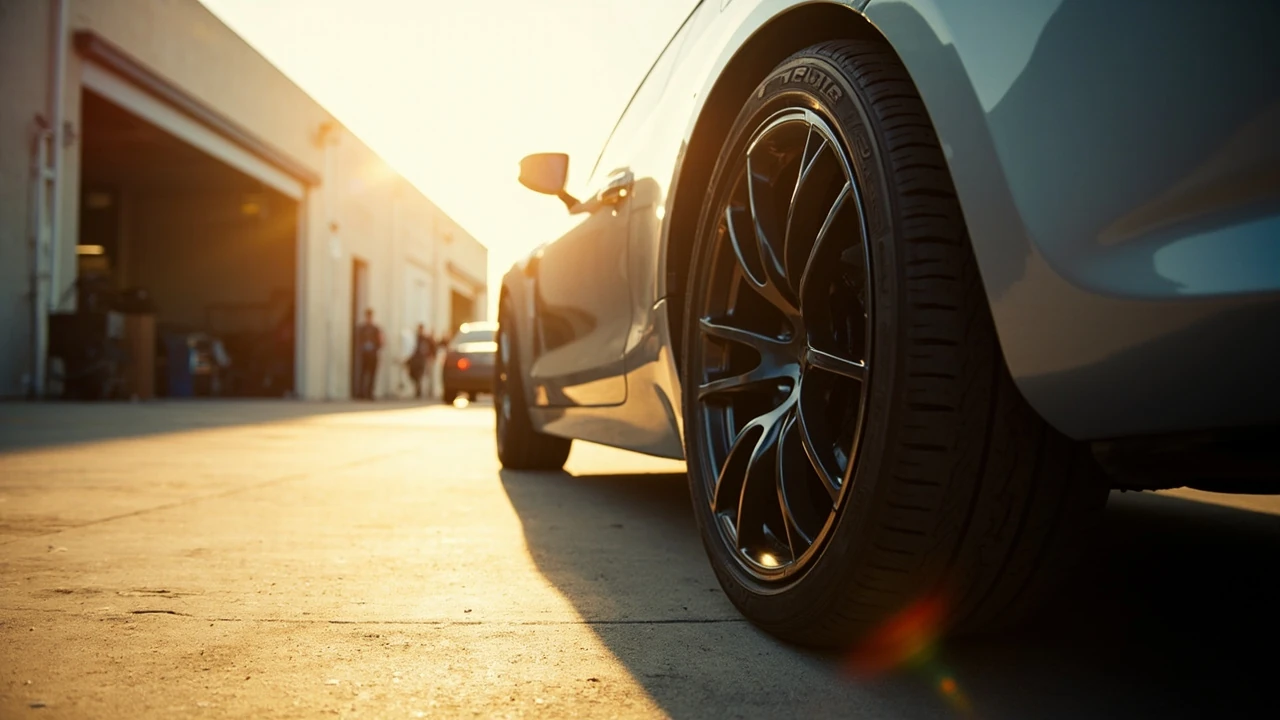
Falken Azenis FK510: what this tire is designed to deliver
Choosing a summer performance tire can be confusing when a product listing highlights speed ratings, grip claims, tread patterns, and fitment in nearly the same font. The Falken Azenis FK510 is positioned for drivers who want a high-performance summer tire for a compatible passenger car, with particular attention to steering response, stability, and wet-weather traction. It is not a tire for every vehicle, climate, or driving style, however, and the right size matters before appearance or tread design enters the decision.
The most useful way to evaluate the Falken Azenis FK510 is as a complete fitment question. Start with the tire size required by the vehicle, confirm that the speed and load ratings meet or exceed the original-equipment requirements, and then consider whether the tire’s summer-focused design suits your roads and typical use. A high-performance tire can improve the feel of a capable car, but it cannot compensate for an incorrect size, worn suspension components, underinflation, or aggressive cornering beyond what the pavement allows.
That distinction matters because a model name alone does not identify a single tire. Falken sells the AZENIS FK510 in multiple sizes, and the construction can vary by size. The 295/30R20 version, for example, is documented as an ultra-high-performance summer tire with a speed rating of Y, an XL load range, four circumferential grooves, and a hybrid under-tread cap ply. Those details make it appropriate for certain high-performance applications, not a universal fit for vehicles wearing smaller or larger factory-approved dimensions.
| Decision point | What to verify | Why it matters |
|---|---|---|
| Vehicle fitment | Approved tire size, speed rating, load rating, and clearance | Correct fit preserves steering geometry, braking balance, and the vehicle’s intended handling. |
| Driving environment | Warm-dominant conditions and expected road temperatures | A summer compound is not intended to provide the same cold-weather performance as an all-season or winter tire. |
| Suspension condition | Tire wear, wheel alignment, shocks, bushings, and wheel mounting surfaces | New performance tires can expose worn components that were previously masked by an older set. |
| Load | Vehicle weight, occupants, cargo, and the tire’s load rating | Every installed tire must support the vehicle’s actual load at the rated pressure. |
Is the Falken Azenis FK510 right for your vehicle?
The Falken Azenis FK510 is most likely to fit a driver who has a vehicle designed around a wide, low-profile tire and who prioritizes dry-road response and high-speed stability over all-season versatility. The model can suit sports sedans, performance coupes, and other compatible vehicles, but the correct answer depends on the size approved for the exact model, trim, and wheel combination.
Begin with the tire information in the driver’s door jamb, the vehicle owner’s manual, and the tire molded into the current tire’s sidewall. Look for a complete size such as 295/30R20, along with the original load index, speed rating, and any requirement for an XL or reinforced tire. Compare all of those figures with the replacement tire being considered. Do not rely on the outside diameter alone, because a tire with a similar overall diameter can still differ in width, aspect ratio, rim diameter, construction, and loaded shape.
Wheel width is another part of the fitment check. A tire may measure correctly in millimeters while still sitting too close to the suspension, fender, brake hardware, or wheel lip. Conversely, a tire that looks visually dramatic may interfere with steering components at full lock. If the size is not listed as an approved fitment for the vehicle, have a qualified tire professional check the proposed combination rather than assuming that a slightly different width will be harmless.
Fitment also includes ride height and suspension setup. Lowering, lifting, or replacing dampers can change the space available above the tire. Modified vehicles may need a tire that is both physically clear and approved for the loads imposed by the altered setup. Stock fitment data remains the most useful starting point, but it is not a substitute for checking the car as it is actually configured.
Use this checklist before ordering:
- Read the full tire size from the vehicle placard or owner’s manual.
- Confirm the required speed rating and load index for every wheel position.
- Check whether the vehicle requires an XL or reinforced replacement.
- Compare wheel width, rim diameter, sidewall height, and overall diameter.
- Verify steering, brake, and fender clearance with the wheel and suspension in their installed position.
- Keep load and speed ratings consistent when replacing only part of a set.
When comparing tire sizes, include these details in the final decision:
| Size characteristic | What it changes | Questions to answer |
|---|---|---|
| Rim diameter | The wheel and tire mounting relationship | Does the wheel fit without modification, and does the vehicle permit this diameter? |
| Section width | Overall width, footprint shape, and road contact area | Is the tire approved for the rim width and free of interference? |
| Aspect ratio | Sidewall height | Will the ride height, steering clearance, and suspension geometry remain correct? |
| Speed rating | The tire’s permitted speed capability | Is it equal to or higher than the vehicle’s requirement? |
| Load index | The maximum load carried per tire | Is it adequate for the vehicle and its expected occupants and cargo? |
| XL or reinforcement | Load-carrying capacity at a given inflation pressure | Does the vehicle specifically require this construction? |
How the Falken Azenis FK510 tread design affects driving
Tread design is more than a pattern of grooves and blocks. Its blocks, sipes, edges, and channels affect how the tire responds during acceleration, braking, cornering, and rain evacuation. On the documented 295/30R20 version, the Falken Azenis FK510 uses four circumferential grooves and a hybrid under-tread cap ply. The grooves provide space for water to move away from the contact patch, while the cap ply is part of the tire’s high-speed stability structure.
Four circumferential grooves are not a guarantee against hydroplaning, just as an aggressive-looking tread cannot create grip that the pavement does not offer. Water depth, inflation pressure, vehicle speed, worn tread, and the amount of water on the road all influence traction. Standing water is especially hazardous because the tire may lose direct contact with the road as its speed increases. Slowing down is the most reliable response when visibility, spray, or standing water makes the lane uncertain.
The tread’s shoulder and intermediate-zone features influence steering feel and cornering support. A broad outside shoulder can contribute to lateral response as the tire changes direction, while intermediate blocks and sipes help the tread remain responsive across a range of conditions. Exact features vary by size, so a product photograph or review of one Falken Azenis FK510 size should not be treated as a complete description of every version in the model line.
Performance tires also make feedback easier to notice. A driver may feel the road more clearly through the steering wheel and suspension because the tire follows surface changes closely. That can feel like improved control, but it can also reveal imperfections such as uneven pavement, worn wheel bearings, or alignment problems. Lower rolling resistance and ride comfort should not be inferred solely from tread appearance, either; those characteristics depend on the complete tire construction, compound, size, inflation, and vehicle.
For the strongest results:
- Inflate the tire to the pressure shown on the vehicle placard, then check it again when the tires are cold.
- Rotate according to the vehicle manufacturer’s schedule and the tire manufacturer’s instructions.
- Use smooth acceleration and braking inputs rather than abrupt inputs that waste traction.
- Allow additional stopping distance in wet conditions, especially on high-performance tires that may put more rubber on the road.
- Keep the wheel alignment within the vehicle manufacturer’s specifications.
Suspension and alignment maintenance deserves special attention when replacing a set of performance tires. A tire can wear unevenly because its pressure is wrong, the alignment is off, or a control arm, bushing, shock, or wheel bearing is damaged. Installing new tires without correcting the cause repeats the problem and can produce inconsistent handling. If a vehicle pulls to one side or shows irregular wear, have the cause diagnosed before mounting the replacement set.
How to read Falken Azenis FK510 tire sizes and ratings
A tire size looks dense until each number has a job. In 295/30R20, 295 is the nominal section width in millimeters, 30 is the aspect ratio, R identifies a radial construction, and 20 is the rim diameter in inches. The tire’s actual dimensions can vary slightly from those nominal values, which is normal, but it must still fit the approved combination for the vehicle.
The load index is a numerical code tied to a maximum load per tire. A speed rating letter states the maximum speed at which the tire can operate under its specified conditions. The documented 295/30R20 Falken Azenis FK510 has a Y speed rating and an XL load range, with a listed maximum load of 1,819 pounds for that specific tire. The product record also gives a UTQG rating of 300AAA. These are not interchangeable measures: traction, treadwear, and temperature grades describe different aspects of the tire’s capability.
The For additional context, 295/30-20 product details for this tire identify it as an ultra-high-performance summer model for premium vehicles and list the four circumferential grooves, hybrid under-tread cap ply, Y speed rating, XL construction, and 1,819-pound maximum load. The page also lists vehicle applications including certain McLaren and Jaguar models. Always verify the exact size, model year, trim, and wheel configuration because a general application list cannot account for every factory or aftermarket combination.
A higher speed rating does not mean the vehicle should be driven faster. The rating identifies what the tire is designed and tested to handle; it does not establish a safe speed for the road, weather, traffic, or driver. Likewise, the XL marking means the tire can carry more load at a specified pressure than a standard-load tire of the same size. It does not mean the vehicle is permitted to carry unlimited weight.
| Marking or term | Meaning | Buying guidance |
|---|---|---|
| 295 | Nominal section width in millimeters | Compare with the approved size and rim-width range. |
| 30 | Sidewall height as a percentage of section width | Consider ride height, steering clearance, and overall diameter. |
| R | Radial construction | Confirm that the replacement matches the vehicle’s required construction. |
| 20 | Rim diameter in inches | The wheel must be the correct size and in safe condition. |
| Y | Speed-rating symbol | Use only when permitted by the vehicle and load requirements. |
| XL | Reinforced or extra-load construction | Confirm that the load rating meets the vehicle’s requirement. |
| UTQG | Treadwear, traction, and temperature grades | Treat the grades as related ratings, not one overall performance score. |
If a tire size is missing from a retailer’s search results, do not assume the model is unavailable. Many sellers organize inventory by size, so searching the correct dimensions can be more effective than searching only by the tire line. Conversely, if several sizes appear, resist choosing solely by price. Start with the vehicle-approved size and then compare ratings, age, condition, and construction.
Dry, wet, and cold-weather performance: what to expect
The Falken Azenis FK510 is a summer performance tire, and that category defines its strongest use case. In warm, dry conditions, the driver can benefit from responsive steering and the stability associated with a high-performance tread and construction. It is best suited to roads where summer operating temperatures are consistently within the tire’s intended range.
Wet performance deserves careful thought rather than a simple wet or dry label. The four circumferential grooves on the documented 295/30R20 version can help move water out of the tread area and resist hydroplaning compared with a design without comparable drainage channels. Even so, the tire still needs adequate tread depth and correct pressure, and the vehicle must be driven at a speed appropriate for the available traction.
Hydroplaning can begin when a film of water builds faster than the tire can displace it. The vehicle then loses much of its ability to steer or brake, regardless of how capable the tire appears on dry pavement. Deep water around wheel openings or the spray generated by large vehicles can make a nominally sound tire feel less responsive. If visibility drops or water covers part of the lane, reduce speed before traction becomes an emergency.
Cold temperatures create a different limitation. Summer rubber compounds can become stiff when temperatures fall, reducing the available grip compared with a tire designed for those conditions. The Falken Azenis FK510 should not be treated as a substitute for a qualified winter tire in sustained cold weather, snow, or ice. Drivers in regions with cold winters should plan on seasonal tires or another safe strategy when temperatures fall below the tire’s intended operating range.
Use this seasonal decision guide:
- Warm and dry: This is the model’s natural environment. Correct fitment and pressure remain essential.
- Warm and rainy: The tread design can help with drainage, but visibility, standing water, and stopping distance still require conservative driving.
- Variable temperatures: Stay alert for colder mornings and any stretch of pavement where the compound may not operate as intended.
- Snow or ice: Choose a tire approved for winter conditions rather than relying on summer-tire tread depth.
- Very high speeds: Use only a tire approved for the vehicle and keep speed within road, weather, and legal limits.
One of the biggest practical benefits of a summer performance tire is its communication. Steering response, braking effort, and the sound or feel of the road can make the limits of grip easier to sense. These cues are useful only when the driver responds consistently. The most capable tire cannot overcome an abrupt steering input, excessive speed, or a panic stop on a slippery surface.
How does the Falken Azenis FK510 compare with other performance tires?
A meaningful comparison starts with the driving task. A tire optimized for a sport coupe on warm, dry roads may not be the best choice for a daily-driven sedan in a region with harsh winters. Another performance tire may offer a different balance of warm-weather grip, response, ride comfort, treadwear, wet performance, and price. Because the Falken Azenis FK510 is offered in many sizes, the closest comparison may be another tire in the same size and load category.
Compare tires using the requirements of the vehicle rather than a brand preference. A touring-oriented tire may provide a quieter, more comfortable daily-driving experience. A track-focused tire may offer a sharper response but wear faster or feel noisier on ordinary roads. An all-season tire may make year-round ownership easier in a variable climate, although it will not be a direct substitute for a summer performance model on a hot, dry road.
| Comparison factor | What to inspect | Best use of the information |
|---|---|---|
| Approved fitment | Exact size, load index, speed rating, and reinforcement | Eliminate options that are not safe or suitable for the vehicle. |
| Weather | Warm-weather versus cold-weather operating range | Match the tire to the climate and season rather than a generic category label. |
| Response | Steering feel, turn-in, and braking behavior | Consider the vehicle and the driver’s priorities. |
| Ride quality | Road noise, impact harshness, and suspension interaction | Assess on roads the vehicle actually uses. |
| Wear | Treadwear grade and real-world condition | Estimate ownership needs without treating a grade as a mileage guarantee. |
| Wet conditions | Tread design, tread depth, and appropriate speed for water depth | Recognize that every design has operating limits. |
| Price and availability | Total purchase cost, mounting, balancing, and local inventory | Compare complete ownership cost, not just the tire’s sticker price. |
Also consider how the existing wheel and suspension work together. A low-profile performance tire can react more sharply to alignment errors and worn dampers than a taller touring tire. Drivers switching tire types should not assume that the vehicle will feel identical in every situation. The steering effort, ride quality, road noise, and response may all change.
For a controlled comparison, drive familiar routes on the same day when possible, with the tire pressures set correctly. Avoid changing one variable at a time in a way that makes the test unsafe. If comparing two sets on the same vehicle, reinstall the wheels and torque them in the correct sequence with the specified torque. Keep the comparison focused on normal driving rather than emergency maneuvers or speeds beyond posted limits.
Buying, mounting, and break-in checklist
A purchase decision should include the small details that determine whether a new tire can be installed correctly. Confirm the complete size, rating, tire type, and quantity. If replacing only two tires on a vehicle designed for a specific tire construction, follow the vehicle manufacturer’s guidance. The remaining tires may influence the vehicle’s stability and braking behavior, so mixing tires with substantially different design, construction, or wear levels deserves careful thought.
Check tire age where the date is molded into the tire. New does not always mean recently manufactured, and age affects how the materials and condition should be assessed. Inspect the tires for damage, uneven wear, exposed cords, bulges, or bead damage. Also verify that the wheels are free of bends, cracks, excessive corrosion, and damaged mounting surfaces. A new tire is not safe on a compromised wheel.
Professional mounting can include:
- Removing the old tire and inspecting the rim.
- Checking wheel weight and tire balance.
- Mounting and inflating with the correct equipment.
- Torquing wheel nuts or bolts in the manufacturer’s sequence.
- Resetting the tire-pressure monitoring system when required by the vehicle.
- Checking the tire after the first drive for pressure loss or abnormalities.
New performance tires can feel different from the set they replace. The tread may be sharp, the steering may be more immediate, and the vehicle may react more clearly to road texture. Allow the first drive to be conservative. This is a familiarization period, not a test of maximum grip. Avoid hard cornering, abrupt braking, and high-speed acceleration until you understand the car’s behavior with the new tires.
After installation, recheck pressures when the tires are cold and follow the vehicle placard rather than a number printed only on the tire. The sidewall lists maximum and minimum allowable pressures, but those limits do not replace the correct operating pressure for the vehicle. If the tire loses air, appears underinflated after driving, or develops a bulge, do not continue normal use until the cause is checked.
At installation, also confirm the tire and wheel combination visually:
- The full size markings match the intended fitment.
- The tire sits evenly within the wheel and shows no bead or sidewall damage.
- Wheel hardware is clean, undamaged, and installed according to the vehicle’s procedure.
- The tire clears the brake components, suspension, and fender at full steering lock.
- No warning light remains active after the vehicle’s required reset or relearn procedure.
- The tire pressure is correct for the vehicle, not merely within the maximum printed on the sidewall.
Long-term ownership: wear, rotation, and replacement
Performance driving, heavier vehicles, high operating temperatures, and aggressive acceleration can increase wear, but tire life depends on more than the tire model. Alignment, pressure, vehicle load, road surfaces, driving style, wheel balance, and suspension condition all matter. A tire can also appear nearly new yet still need replacement if it was stored improperly or has reached the end of its serviceable life.
Rotate the tires on the schedule recommended by the vehicle and tire manufacturers, especially if the Falken Azenis FK510 is installed on an all-wheel-drive vehicle. Rotation does not create more tread, but it can help distribute wear and allow each tire to experience a more balanced share of the vehicle’s loading. If rotation is not practical, follow the manufacturer’s instructions regarding treating the resulting wear pattern.
Do not wait for the minimum legal tread depth when the tire shows signs of aging, cracking, punctures, or impact damage. Inspect the sidewalls for bulges, cuts, scuffs, and exposed belt edges. Examine the tread for irregular wear, cracking, and embedded debris. A tire that has been run below its usable tread depth can lose performance in rain and may be more vulnerable to damage.
| Ownership issue | Warning signs | Action |
|---|---|---|
| Uneven wear | Feathered edges, diagonal wear, or one-sided tread loss | Check pressure, alignment, suspension parts, and wheel balance. |
| Pressure loss | Repeated low readings or a visibly softer sidewall | Inspect for puncture, valve, bead, or wheel damage before adding air. |
| Age or storage damage | Fine sidewall cracking or uneven flat spotting | Have the tire inspected and replace it if deterioration is significant. |
| Impact damage | Local bulge, deformation, or exposed material | Remove the tire from service and obtain a professional assessment. |
| Vibration | Ripple through the steering wheel or seat | Check balance, wheel condition, tire wear, and suspension components. |
When evaluating the age of a tire, use the molded date rather than the invoice date. The four-digit week-and-year code is a production identifier, not a retail date. Storage history matters as well because heat, moisture, sunlight, and long periods of flexing can degrade a tire before it reaches the road. A tire of uncertain history deserves an inspection rather than an assumption based on its appearance.
Properly maintained Falken Azenis FK510 tires can give a compatible vehicle a more focused road feel, but they cannot make poor maintenance disappear. A regular pressure check, alignment inspection, rotation, and prompt replacement of damaged tires are the basic costs of safe performance-tire ownership.
Frequently asked questions
What vehicles can use the Falken Azenis FK510?
The Falken Azenis FK510 is available in sizes used by many performance-oriented passenger vehicles, but fitment depends on the exact model, year, trim, suspension, and factory wheel configuration. The 295/30R20 version is listed for several McLaren and Jaguar applications, among others. Check the approved size on the vehicle placard and confirm the specific tire in the vehicle’s fitment guide before ordering.
Is the Falken Azenis FK510 a good tire for daily driving?
It can be suitable for daily driving when the vehicle is compatible and the driver lives in a warm-dominant climate. The tradeoffs may include a firmer ride, more road noise, quicker steering response, and potentially faster tread wear than a touring-oriented tire. Drivers should also plan on appropriate winter tires if their local conditions require them.
Is the Falken Azenis FK510 good in the rain?
The documented 295/30R20 version has four circumferential grooves intended to help evacuate water and resist hydroplaning. That design can support wet-weather performance, but it does not remove the need for correct pressure, sufficient tread depth, and conservative speed. Standing water remains dangerous, and the tire cannot prevent loss of traction when the conditions exceed its operating range.
What does the Y speed rating on the Falken Azenis FK510 mean?
The Y rating indicates the maximum speed category for which that tire construction is designed and tested. It must meet the vehicle manufacturer’s minimum requirement, but it does not mean the vehicle should be driven at the rated maximum. Posted limits, traffic, weather, road conditions, and driver judgment still control the safe speed.
What does XL mean on the Falken Azenis FK510?
XL identifies a reinforced or extra-load version designed to carry more weight at a specified inflation pressure than a standard-load tire of the same size. The 295/30R20 version listed in the supplied product record has an XL load range. XL does not mean unlimited payload; the tire’s load index and the vehicle’s requirements must still be satisfied.
Can I install a different tire size from the Falken Azenis FK510 line?
Only if that exact size is approved for the vehicle and the wheel, suspension, brake, and fender-clearance requirements are met. A tire with the same brand and model name can have different dimensions, ratings, and construction in each size. Compare the complete size and specifications rather than treating model-name availability as proof of fitment.
Do I need an alignment after installing new Falken Azenis FK510 tires?
An alignment is not automatically required with every tire replacement, but it is sensible when uneven wear is present, the vehicle pulls, steering feels inconsistent, or a wheel has been damaged or altered. New tires can make alignment errors more noticeable because they provide stronger feedback. A professional should diagnose the cause rather than assume a single problem explains every symptom.
How should I break in new Falken Azenis FK510 tires?
Drive conservatively at first. Avoid aggressive cornering, hard braking, and high-speed acceleration while you become familiar with the vehicle’s steering and braking response. Confirm correct cold pressures, ensure the wheels are torqued according to the vehicle’s procedure, and recheck for pressure loss or unusual vibration after the first drive.
Can I use the Falken Azenis FK510 in snow or ice?
No. The Falken Azenis FK510 is a summer performance tire, not a substitute for a tire designed for winter traction. Its rubber compound and tread design are not intended to provide the same performance in snow or ice. Use qualified winter tires when winter conditions are present, regardless of the remaining tread depth on the summer set.
How do I know when Falken Azenis FK510 tires need replacement?
Replace them when remaining tread reaches the end of its serviceable life, when the tires show cracking, bulges, impact damage, cord exposure, or other structural deterioration, or when wear is caused by an unresolved mechanical problem. A tire-pressure monitoring warning can also require inspection, but it should not be treated as a complete tread-life test. Follow the vehicle and tire manufacturers’ inspection and replacement guidance.
Leave a Reply