
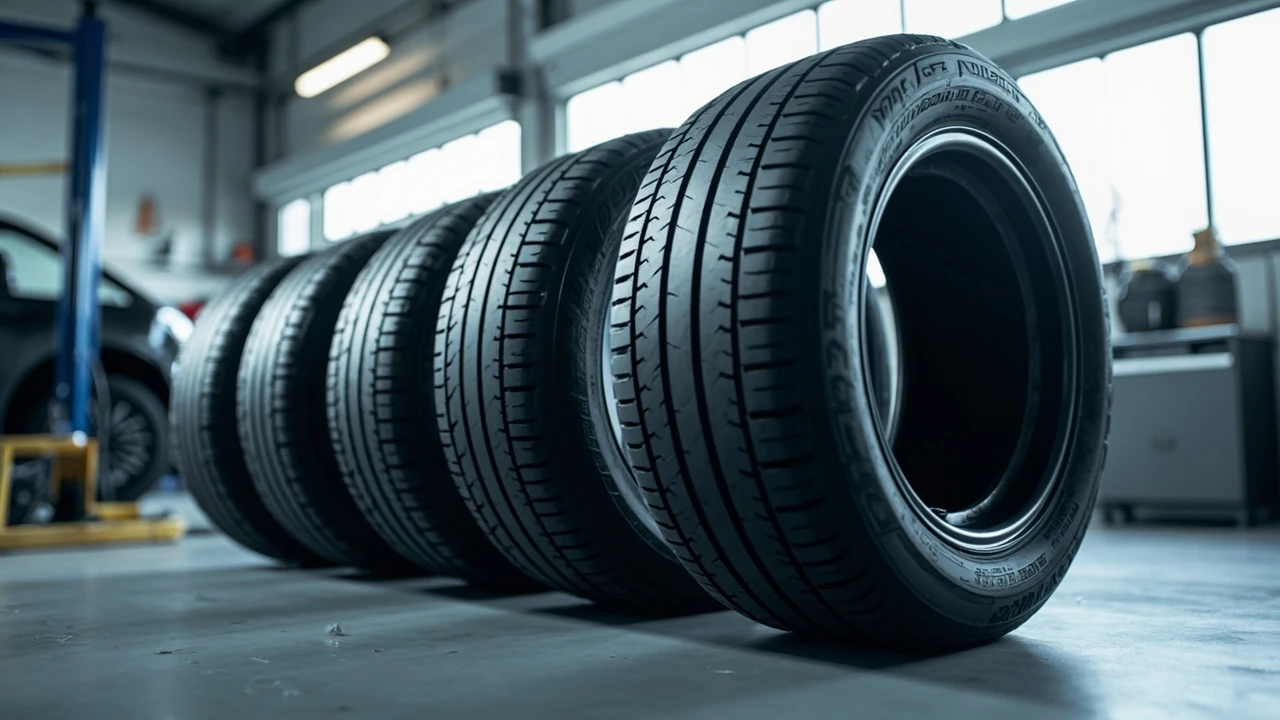
Buy 3 get 1 free tires: how to determine whether the promotion is worth it
A buy 3 get 1 free tires promotion sounds straightforward: purchase three tires and receive a fourth at no additional tire cost. The catch is that the value depends on more than the advertised price. The free tire still has to fit the vehicle, meet the driver’s safety needs, and carry a useful amount of tread life. Installation, wheel alignment, taxes, disposal fees, shipping charges, and the retailer’s conditions can also change the real price of the set.
Some shoppers begin by looking only for the largest advertised discount. That approach can lead to buying more tires than the vehicle needs or overlooking a promotion with narrow conditions. A better decision starts with four tires of the correct size and construction, then calculates the total delivered cost and compares the resulting cost per mile with reasonable alternatives.
The promotion format has a useful warning built into it. In general, a “buy one, get one free” offer is designed around a full-price purchase, and the [general background on buy-one-get-one-free promotions](https://en.wikipedia.org/wiki/Buy_one,_get_one_free) explains both the appeal and the criticism of such offers: shoppers may spend more overall than they intended because the discount encourages extra purchases. That concern applies directly when a tire offer assumes a vehicle needs four tires at once.
Before ordering, confirm whether the offer is genuinely a four-tire deal or a larger set that includes a vehicle with a spare tire. Check the free tire’s size, brand, model, speed rating, load rating, warranty, and tread condition. Then review the out-the-door price, installation requirements, and return policy. If any part of the offer is vague, ask the retailer to put the details in writing before installation begins.
What makes a four-tire promotion a good deal?
The best value from a buy 3 get 1 free tires offer is not necessarily the one with the highest advertised savings. It is the offer that gives you a complete, suitable set of tires without paying for unnecessary products or services. Start by separating the tire cost from every other charge that appears later in the transaction.
| Component | What to verify | Why it changes the value |
|---|---|---|
| Four tire prices | Price charged for the three purchased tires | The retailer needs to state whether the discount applies before tax and before installation. |
| Free tire | Size, model, condition, and availability | A free tire of the wrong size or with limited remaining life may have little practical value. |
| Installation | Cost to mount, balance, and remove the old tires | Labor can offset the tire discount, especially if the order does not include balancing. |
| Alignment | Whether it is included, discounted, or optional | Alignment is a separate service and may be needed if the old tires wore unevenly. |
| Other services | Road-force balancing, tire disposal, nitrogen, valves, and storage | Optional services can turn a simple tire purchase into a higher-priced service order. |
| Taxes and shipping | Charges based on the purchase and delivery location | The final amount may differ from the headline promotion. |
It also helps to distinguish a promotional price from a true free product. If the retailer adds the fourth tire to the invoice at a substantial price, the promotion is not functionally free even if a coupon or rebate is used to reduce that line item. Similarly, a rebate may require a claim form, receipt, registration, or tire installation record, and it may leave the shopper waiting months for the money.
A strong offer makes the important terms clear before the customer commits:
- The first three tires must be purchased at the stated price.
- The free tire must match the specified size and construction.
- The offer applies to the vehicle’s complete set of usable tires.
- Mounting, balancing, disposal, taxes, and alignment are either clearly included or clearly priced.
- The new tires must be new and eligible for the advertised warranty.
- Returns or adjustments follow a stated process rather than an informal verbal promise.
When those points are documented, the shopper can compare the promotion with ordinary tire pricing. When they are not, the advertised headline carries more risk than value.
Confirm that the free tire actually fits
Fitment is where many tire promotions create false confidence. A “free tire” may share a nominal width with the other three while having a different aspect ratio, construction type, or overall diameter. Those differences can affect the speedometer, tire clearance, load capacity, and the vehicle manufacturer’s requirements. The safest assumption is that fitment is determined by the complete size specification, not by appearance or diameter alone.
Locate the tire information in the driver’s door-jamb placard and compare it with the current tires. The placard may show a tire size, load rating, speed rating, and cold inflation pressure. If the placard is missing or unreadable, use the vehicle manual or ask a qualified tire professional to identify the approved fitment. Do not rely on the year, make, and model alone because trims and wheel packages can use different tire combinations.
Also check whether the vehicle requires the same tire type on all four positions. Some vehicles are designed for mixing tire types or manufacturers under specific conditions, while others are not. A promotion that pairs three tires from one set with a different free tire may create a mismatch even when the numbers appear close. Ask the retailer to explain any mixing allowance in writing and confirm that the resulting setup will be accepted under the vehicle manufacturer’s guidance.
The tire’s load and speed ratings should meet or exceed the vehicle’s requirements. A tire can have the correct dimensions but still be unsuitable if it is rated below the required load or speed. The retailer should be able to verify the tire identification number, manufacturer, model, size, production date, and ratings before the tires are installed.
One more check concerns tread and appearance. A promotion should normally provide four new tires from the same sales batch. If the free tire is used, a display model, an older production, or a different model, the value depends on its condition and remaining life. Compare that condition with the three tires being purchased rather than treating the fourth tire as automatically equivalent.
Calculate the real cost of the promotion
Use the final invoice, not the promotional headline, to calculate value. Divide the total amount paid by four to obtain the effective cost per tire. Then compare that figure with the cost of the same size and comparable tire model sold without the promotion. A free tire can still produce a disappointing result if the three purchased tires are heavily discounted models while the free tire is a premium model whose expected service life is much shorter.
For a more useful comparison, estimate the tire’s expected tread life and the cost of the set per mile. This is especially important for drivers who put substantial annual mileage on a vehicle. For additional context, If one tire in a four-tire set has a shorter useful life, it may need replacement sooner, reducing the savings from the promotion.
| Comparison point | Buy 3 get 1 free tires | Purchase without promotion |
|---|---|---|
| Comparable tire model | Check whether all four are the same model or a deliberate mixed set | Compare like-for-like models and sizes |
| Total amount paid | Include installation, balance, alignment, taxes, and required services | Include the same service charges for a fair comparison |
| Effective cost per tire | Total cost divided by four | Total cost divided by four |
| Expected time until replacement | Estimate from tread design, intended use, and available tread-life information | Compare the same information for the alternative set |
| Warranty coverage | Confirm coverage on all four tires, including the free one | Compare workmanship and manufacturer coverage separately |
Do not assign a precise mileage figure without checking the tire model, vehicle, driving conditions, and maintenance history. Tire wear can vary substantially. If the driver expects to keep the vehicle long enough for the tires to wear out, the initial discount may matter less than tread design, construction, and expected wear resistance. For a related look at realistic replacement planning, see [How Many Miles Do Tires Last? What Drivers Should Really Expect](https://drivewisegarage.com/how-many-miles-do-tires-last/).
It is also important to count required purchases. Some promotions appear to provide four tires, but the free tire is the fourth item in a multi-tire package. If the vehicle needs only three usable tires because the fourth wheel belongs to a full-size spare, the buyer may end up with an extra tire. Conversely, if the vehicle genuinely needs four tires and the offer supplies them at a lower net cost, the promotion can be worthwhile.
Consider the vehicle, driving conditions, and tire performance
A promotion does not solve a mismatch between the tires and the vehicle. The right choice still depends on where and how the car is driven. A commuter traveling mostly paved highways may prioritize tread life and fuel efficiency. A vehicle hauling cargo or towing a trailer may need an appropriate load rating. Drivers in regions that encounter snow, ice, or frequent heavy rain may need to consider the tire’s intended seasonal use rather than selecting solely on price.
Review the tire’s permitted service conditions. Summer, all-season, and winter tires are designed for different operating environments, and their legal or recommended use may depend on temperature as well as road conditions. A promotional set containing the wrong category for the driver’s region can create safety and usability problems that outweigh the discount.
Consider the vehicle’s current condition too. If the car pulls to one side, vibrates, or has uneven tread wear, new tires may not solve the underlying issue. A shop should inspect the vehicle before installing the set. Common checks include:
- Wheel and tire condition for damage, cracks, bulges, or exposed cords
- Tire wear patterns that may indicate alignment, inflation, or mechanical issues
- Brake, suspension, and steering components when symptoms suggest a related problem
- Wheel fit, clearance, and the condition of the spare tire
- Whether road-force balancing is needed for the installed tires
New tires may also reveal vibration that was masked by the old set. If a warning light appears after installation, have the vehicle inspected rather than assuming the problem will disappear. The [Service Tire Monitor System: What the Warning Really Means](https://drivewisegarage.com/service-tire-monitor-system/) guide explains why the monitor reports more than a simple low-pressure alert.
For most routine highway use, the promotion should be judged by fitment, construction, expected wear, and delivered cost. Specialty applications require a closer technical match. The free tire may be free in name while being the wrong choice for the vehicle, so do not accept it without comparing its specifications with the other three.
Check installation, warranty, and return terms
The tire is not installed merely by fitting it onto the wheel. A proper installation includes removing the old tires, inspecting the wheels, mounting the new tires, inflating them to the vehicle’s requirements, balancing the assemblies, reinstalling them, and checking torque with a calibrated wrench. Ask whether the retailer performs road-force balancing or only standard wheel balancing, because the methods are not interchangeable.
Written terms are especially important when the fourth tire is free. Review the following items before authorizing work:
- Price protection: Confirm the exact amount charged for each of the three purchased tires and the amount charged for the free tire.
- Service charges: Ask for a written estimate of mounting, balancing, disposal, alignment, and any other required service.
- Warranty: Verify that the free tire receives the same manufacturer and retailer coverage as the purchased tires.
- Return or adjustment process: Determine what happens if a tire is damaged during installation, the wrong size is supplied, or a balance issue appears after the vehicle leaves.
- Invoice: Request the final itemized receipt and compare it with the agreed price.
A verbal assurance that a problem “will be handled” has little value when the invoice, warranty booklet, and return terms conflict. The retailer’s written policy should identify which company handles the claim and how the customer must document the issue.
Also determine whether the promotion applies to the order as a whole. For example, canceling one tire may change the eligibility of the entire set and make the free tire chargeable. Drivers who expect to replace only one damaged tire in the future should ask how that scenario affects the offer. The answer may be better if the tires are purchased for a vehicle that genuinely needs four tires now.
Finally, inspect the delivered set before leaving. Confirm that all four tires match the promised size and model, that no visible damage occurred during mounting, and that the invoice matches the quoted charges. Keep the receipt and warranty documents for future service or claims.
A practical checklist before ordering
A short written comparison can prevent a rushed decision. Use this checklist to evaluate a buy 3 get 1 free tires offer against regular tire pricing:
- Confirm the vehicle’s approved tire size, load rating, speed rating, and seasonal requirements.
- Verify that the promotion supplies four usable tires rather than counting a spare or unrelated product.
- Ask whether all four tires are new, the same model, and covered by the same warranty.
- Get an itemized estimate covering tires, installation, balancing, disposal, alignment, taxes, and optional services.
- Compare the effective total cost with regular pricing for an equivalent tire set.
- Check production dates, condition, and identification numbers for the free tire.
- Review return, adjustment, and damage-during-installation terms in writing.
- Inspect the tires and wheel fitment after installation, then retain the final invoice.
If the retailer cannot answer a fitment or billing question clearly, pause before authorizing the installation. A promotion should reduce the cost of suitable tires, not require the customer to become the installer, compatibility checker, and warranty administrator.
The most reliable four-tire promotion offers the correct set at a lower net cost, includes transparent service pricing, and applies the same warranty to every tire. If the free tire differs in model or expected tread life, compare that difference with the savings rather than assuming that any fourth tire has identical value.
Frequently asked questions
Is a buy 3 get 1 free tires promotion really free?
The tire may be free at the point of sale, but the final transaction can still include installation, balancing, alignment, taxes, disposal, and other charges. Read the itemized invoice and compare the total with the regular cost of four equivalent tires. A rebate-based offer is also not the same as an immediate price reduction because the shopper must qualify and receive the money later.
Can I mix tire brands or models in a four-tire set?
Some vehicle manufacturers permit specific combinations, but the answer depends on the tire construction, size, load rating, speed rating, and the vehicle itself. Ask the tire professional to verify the proposed combination against the vehicle manufacturer’s requirements. Do not assume that matching the approximate outside diameter is enough.
Should I add alignment with the tire promotion?
Add alignment when the vehicle needs it or when uneven wear, pulling, or steering symptoms indicate a possible alignment issue. It is not automatically necessary for every tire purchase, and it should not be bundled without an explanation. If the old tires wore unevenly, ask the shop to inspect the vehicle and recommend a written alignment estimate.
Does the free tire come with the same warranty?
It should, if the promotion provides four new tires covered by the same manufacturer and retailer terms. Confirm this in writing before installation. Also verify that the warranty applies to all four positions and that the purchase date and tire identification information appear on the receipt.
Are the tires in a promotion new?
A standard promotion should specify whether the tires are new and whether the free tire comes from the same model and production run as the purchased set. Some deals may involve display, used, or older inventory. Check the condition, manufacturing date, and identification numbers. If the terms do not specify what will be supplied, request that information in writing.
How do I compare this promotion with a discount on four tires?
Compare the total amount paid for equivalent products and services. Subtract installation, balancing, taxes, disposal, and any mandatory extras from each total, then divide by four. Also consider tread-life differences. A smaller upfront saving on tires that will need replacement sooner may cost more over time than a higher-priced set with more suitable characteristics.
Can I use the promotion if I only need one tire?
Usually not. These promotions normally require the purchase of three tires and provide a fourth, so buying three tires when you need only one may create unnecessary spending. Check the expiration date and purchase requirements as well. If the vehicle needs four tires now, the offer can fit naturally; if it needs only one, compare the single-tire price with other options.
What should I do if the wrong tire is delivered?
Do not authorize installation. Contact the retailer before the tires are mounted, provide the order and vehicle fitment details, and ask for the correct product or an updated agreement. Keep the invoice and written communications. If a tire is damaged during installation, document the condition and follow the retailer’s written adjustment process.
Does the free tire lower the cost per mile?
It can, but only if the complete set fits the vehicle, provides suitable performance, and is purchased at a lower total cost. Compare tread life, expected wear, construction, warranty, and required services. A free tire with a much shorter useful life may not provide the same long-term value as the other three tires in the set.
Leave a Reply